
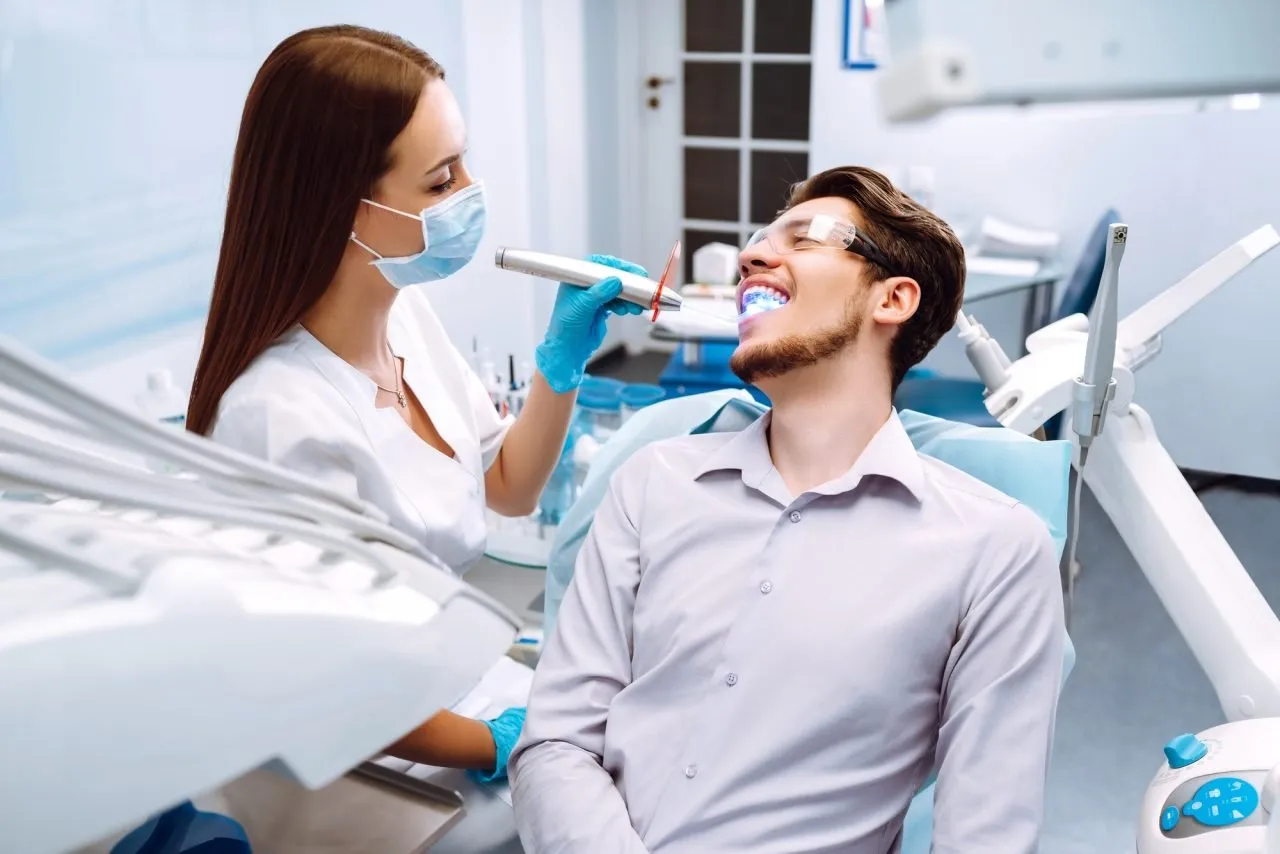
Is Root Canal Treatment Painful? — An Honest Answer from an Indore Dentist (2026)
Of all the questions patients ask at Dream Smile Dental Clinic in Indore, this is the most common: "Doctor, will root canal treatment be painful?"
The honest answer: Root canal treatment does not cause pain — it relieves it. The pain you feel before an RCT (from an infected or abscessed tooth) is far, far worse than anything experienced during the modern procedure itself. With today's technology — rotary instruments, digital X-rays, and effective local anaesthesia — root canal treatment is no more uncomfortable than getting a filling.
This guide explains why root canal treatment has an undeserved reputation for pain, what actually happens during the procedure, and what you can realistically expect in Indore in 2026.
Why Does Root Canal Treatment Have a Reputation for Being Painful?
The "painful root canal" reputation comes from two places:
- History: Root canal treatment decades ago was performed with manual stainless steel files and without digital imaging to locate canals accurately. The procedure was longer, less precise, and required higher doses of anaesthesia because technique was imperfect. Patients shared stories of pain — those stories persisted.
- Waiting too long: Many patients seek dental care only when pain becomes unbearable — at which point infection may be severe. A severely infected tooth is genuinely more difficult to anaesthetise fully. But this is a result of delayed treatment, not the procedure itself.
Today, with modern rotary instruments, apex locators (electronic canal length measurement), cone-beam CT imaging for complex cases, and excellent local anaesthetics — a root canal performed by an experienced dentist is typically comfortable throughout.
What Is Root Canal Treatment? (And Why Is It Needed?)
Inside each tooth is a soft tissue called the "pulp" — a bundle of nerves, blood vessels, and connective tissue. The pulp is located in the crown of the tooth (pulp chamber) and extends down through the roots (root canals) to the bone.
Root canal treatment is needed when the pulp becomes:
- Infected — bacteria enter through a deep cavity, crack, or failed restoration
- Inflamed — from severe decay, repeated dental procedures, or a crack
- Dead (necrotic) — the pulp has died due to trauma or severe infection
An infected pulp cannot heal itself. Without treatment, the infection spreads through the root tip into the bone, causing an abscess — a pus-filled pocket in the jaw. Left longer, the infection can spread to surrounding teeth and, in severe cases, to the face and neck.
Root canal treatment removes the infected pulp, cleans and disinfects the canal system, and seals it permanently — eliminating the source of infection and preserving the natural tooth.
Signs You May Need Root Canal Treatment
- Severe, spontaneous toothache — especially at night or when lying down
- Prolonged sensitivity to hot foods/drinks that lingers for 30+ seconds after the stimulus is removed
- Throbbing, pulsating pain that is hard to localise
- Visible swelling in the gum near a tooth, or facial swelling
- Darkening or discolouration of a tooth
- A pimple-like bump on the gum (sinus tract — pus draining from an abscess)
- Pain on biting or chewing that persists
- A tooth that has had repeated fillings or a very large, failing restoration
Sometimes a tooth needing RCT causes no pain at all — the nerve has died (necrotic pulp). This is why regular dental check-ups with X-rays are important.
Modern Root Canal Treatment — Step by Step
Step 1: Diagnosis and X-Ray
Dr. Nimbark examines the tooth, tests sensitivity to hot/cold and percussion, and takes a digital X-ray. In complex cases, a CBCT (cone-beam CT) scan may be taken for a 3D view of the canal anatomy. This planning step is why modern RCT is so much more accurate than historical treatment.
Step 2: Local Anaesthesia
A local anaesthetic (lignocaine or articaine) is injected near the tooth and nerve. You will feel a brief sting from the needle — about 5–10 seconds. Within 1–3 minutes, the entire area is fully numb. You will feel pressure and vibration during the procedure, but not pain. A topical anaesthetic gel is applied to the gum before the injection to minimise even the needle sting.
For severely infected teeth: Acute infection can reduce the effectiveness of local anaesthesia because infected tissue is acidic, and anaesthetics work less effectively in acidic environments. This is why dentists sometimes prescribe antibiotics for 3–5 days before treatment — to reduce the acute infection, make anaesthesia more reliable, and make the procedure more comfortable.
Step 3: Rubber Dam Isolation
A thin rubber sheet is placed around the tooth to isolate it from saliva. This keeps the canals sterile during treatment and prevents you from accidentally swallowing irrigating solutions. Modern rubber dams are comfortable and sit on a small frame.
Step 4: Access Opening
A small opening is made through the crown of the tooth into the pulp chamber — using the dental drill. You feel pressure and vibration, not pain (you are fully numb). This takes 2–5 minutes.
Step 5: Canal Location with Apex Locator
Electronic apex locators measure the exact length of each canal to within 0.1 mm — eliminating the guesswork that caused problems in older techniques. This step takes 1–2 minutes per canal.
Step 6: Rotary Instrumentation
Flexible, nickel-titanium rotary files are used to clean and shape the canal system. These files rotate at controlled speeds, following the natural curve of the canal, removing infected pulp tissue and debris. Rotary instrumentation is far faster and more comfortable than the older manual file technique.
- Front teeth (single canal): 20–30 minutes
- Premolars (1–2 canals): 30–45 minutes
- Molars (3–4 canals): 45–75 minutes
Step 7: Irrigation and Disinfection
The canal system is flushed with sodium hypochlorite (an antimicrobial irrigant) to dissolve remaining pulp tissue and disinfect thoroughly. Ultrasonic activation of irrigants improves disinfection significantly.
Step 8: Canal Filling (Obturation)
The clean, dry canals are filled with gutta-percha (a biocompatible rubber material) and a sealer cement. The filling is typically done in the same appointment or the next appointment (for cases requiring a medicament dressing first). This seals the canal permanently.
Step 9: Crown/Restoration
After RCT, the tooth must be protected with a crown. Root canal treated teeth are more brittle (the pulp provided moisture and nutrients; without it, the tooth can fracture). A crown distributes chewing forces and protects the tooth for 15–20+ years. See our Crown Cost Guide for Indore.
Single-Sitting vs Multi-Sitting Root Canal Treatment
| Aspect | Single-Sitting RCT | Multi-Sitting RCT (2–3 visits) |
|---|---|---|
| Best for | Non-infected, vital pulp cases; uncomplicated anatomy | Active infection, abscess, complex anatomy, very curved canals |
| Advantage | Fewer appointments; faster recovery | Medicament (calcium hydroxide) placed between visits; superior disinfection for infected cases |
| Success rate | Comparable for appropriate cases | Preferred for infected cases — less post-operative pain |
After Root Canal Treatment — Recovery & What to Expect
- First 24–48 hours: Mild soreness when biting on the tooth — normal and expected as the bone around the root tip is settling. Paracetamol or ibuprofen provides excellent relief.
- Days 3–7: Most post-treatment soreness resolves completely. The tooth feels the same as surrounding teeth.
- Avoid chewing on the treated tooth until a crown is fitted (eating on an unprotected root canal tooth risks fracture).
- Swelling or worsening pain in the first week warrants a call to the clinic — though this is uncommon with modern technique.
Root Canal Treatment vs Extraction — Which Should You Choose?
| Factor | Root Canal + Crown | Extraction + Implant/Bridge |
|---|---|---|
| Preserves natural tooth | ✅ Yes | ❌ No |
| Total cost | ₹5,500–12,000 (RCT + crown) | ₹30,000–35,000+ (implant) |
| Procedure complexity | Single tooth, single site | More complex (surgery + healing + implant) |
| Bone preservation | ✅ Natural root maintains bone | Bone loss occurs after extraction |
| Long-term function | 15–25+ years if well maintained | 10–20+ years for implant |
Verdict: Wherever possible, saving a natural tooth with root canal treatment is always preferred over extraction. Natural teeth function and feel better than any replacement. Extraction should be considered only when a tooth cannot be saved.
Frequently Asked Questions About Root Canal Treatment in Indore
How long does a root canal take at Dream Smile, Indore?
Front teeth: 30–45 minutes. Premolars: 45–60 minutes. Molars: 60–90 minutes. Multi-rooted molars with complex anatomy may need 2 visits. Single-sitting RCT is available for suitable cases.
Can root canal treatment fail?
Yes, but it is uncommon. Success rates are 85–97% at 10 years for properly performed root canal treatment. Failure occurs from missed canals (complex anatomy), persistent infection, crown fracture, or very severe bone loss. Failed root canals can often be retreated (re-RCT) rather than extracted.
Do I need a crown after every root canal?
For back teeth (premolars, molars) — yes, a crown is strongly recommended. These teeth bear the full force of chewing, and root canal treated teeth fracture without crown protection. For front teeth with minimal tooth loss and no grinding habit, a large composite filling may be acceptable in some cases, but a crown is still the gold standard.
What is the success rate of root canal treatment?
Studies consistently show 85–97% success rates at 10 years for properly performed RCT. With post-operative crown placement and regular check-ups, many root canal treated teeth last a lifetime. Source: PubMed — RCT Outcomes Meta-analysis
Can I eat normally after root canal treatment?
Avoid chewing on the treated side until a crown is fitted. Soft foods for 24–48 hours after treatment. Normal diet (excluding very hard foods like sugarcane, hard nuts) is fine after crown placement.
Is root canal treatment safe during pregnancy?
Yes — dental infections during pregnancy are more dangerous than the treatment itself. RCT under local anaesthesia is safe in the second trimester. Dr. Nimbark takes special precautions for pregnant patients including positioning, minimal X-rays, and safe anaesthetic choices.
References: American Association of Endodontists | PubMed — Root Canal Outcomes
Toothache? Don't Wait — It Won't Get Better on Its Own.
Book a same-day appointment at Dream Smile Dental Clinic, Indore. Dr. Shailly Nimbark will diagnose the problem, explain your options, and if root canal treatment is needed, perform it comfortably — often in a single visit.
📅 Book a Consultation 📞 Call: 88270-81906