Professional Teeth Whitening vs Home Kits in India — Honest Comparison 2026
Walk into any pharmacy or scroll Amazon India, and you will find whitening toothpastes, charcoal powders, LED kits, whitening strips, and "celebrity-approved" home kits promising Hollywood-white teeth for a few hundred rupees. Meanwhile, professional teeth whitening at a dental clinic costs ₹7,000–8,000.
Is the professional option worth it? Or can you get the same results at home for a fraction of the cost?
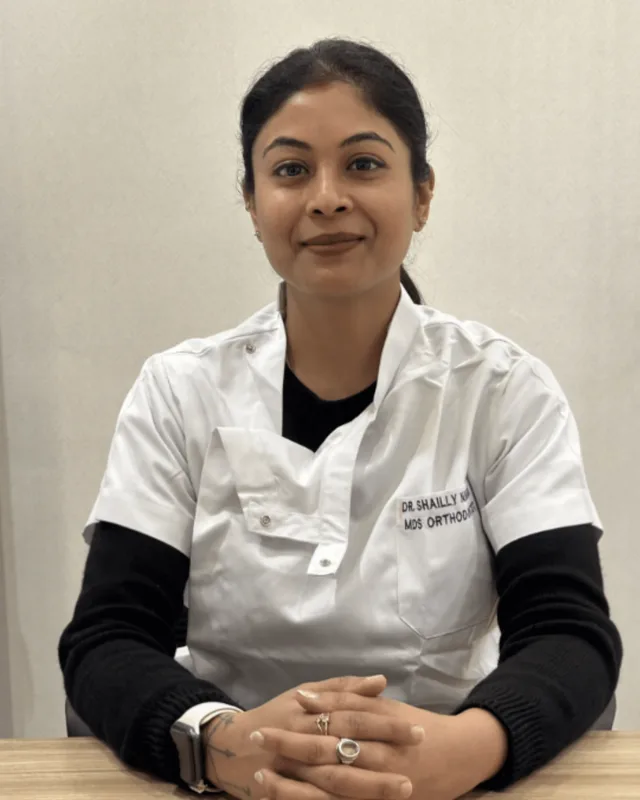
Dr. Shailly Nimbark (BDS, MDS Orthodontist, Dream Smile Dental Clinic, Indore) gives you the unbiased, science-backed answer.
The Science of Teeth Whitening — How It Actually Works
All effective tooth whitening (professional or home) relies on the same chemistry: hydrogen peroxide (H₂O₂) or carbamide peroxide (CO(NH₂)₂·H₂O₂).
When these compounds contact tooth enamel, they decompose into oxygen free radicals. These radicals penetrate the enamel and dentine, breaking down the colour-causing compounds (chromogens) within the tooth structure. The tooth appears lighter because the staining molecules are broken into smaller, colourless fragments.
Key point: concentration matters.
- Professional in-chair systems: 35–40% hydrogen peroxide
- Professional take-home kits (clinic-prescribed): 10–22% carbamide peroxide
- Regulated OTC products in India: maximum 0.1% hydrogen peroxide (EU limit; India follows similar regulations)
- Unregulated online kits: concentration unknown — and potentially dangerous
Products Compared — What Actually Works?
1. Professional In-Chair Whitening (Clinic)
Active ingredient: 35–40% H₂O₂ gel, light-activated
Results: 4–8 shades brighter in a single 60–90 minute session
Safety: Gums protected; administered by trained dental professional; desensitising gel applied post-treatment
Cost in Indore: ₹7,000–8,000
✅ Most effective single-session option. Clinically proven. Safest when administered by a dentist.
2. Clinic-Prescribed Take-Home Kit (Custom Trays)
Active ingredient: 10–22% carbamide peroxide
Results: 3–6 shades over 2–4 weeks of consistent use
Safety: Custom-fitted trays prevent gel contact with gums; concentration supervised by dentist
Cost in Indore: ₹3,000–5,000
✅ Excellent option for patients preferring gradual whitening or who need maintenance. Also ideal for sensitive teeth — lower concentration = less sensitivity.
3. OTC Whitening Strips (Amazon/Pharmacy)
Active ingredient: 0.1% H₂O₂ (regulated limit in India) — some imported strips have higher concentrations not legally approved in India
Results: 1–3 shades improvement over 2–4 weeks (at legally regulated concentrations)
Safety: One-size-fits-all design — gel can contact gums; illegal high-strength strips from unverified sources cause chemical burns
Cost: ₹500–3,000 (Indian brands/imported)
⚠️ Limited effectiveness at regulated concentrations. Unregulated imported high-strength strips pose genuine gum burn risk. Results are modest compared to professional treatment.
4. Whitening Toothpastes
Mechanism: Mild abrasives (hydrated silica, sodium bicarbonate) + low-concentration peroxide (in some brands)
Results: Effective for surface stain removal and maintenance; cannot bleach intrinsic discolouration
Safety: Generally safe; abrasive toothpastes used excessively may erode enamel over time (choose RDA value below 250)
Cost: ₹150–500
✅ Good for maintenance. Not a whitening treatment in the clinical sense.
5. Charcoal Whitening Products
Claims: "Activated charcoal" removes stains and whitens teeth naturally
Reality: Highly abrasive — can wear enamel if used regularly. No clinical evidence of bleaching effect. The ADA explicitly does not recommend charcoal toothpastes. Source: JADA — Charcoal Toothpaste Review
❌ Not recommended. May cause long-term enamel damage.
6. DIY Whitening (Lemon, Baking Soda, Oil Pulling)
Lemon juice + baking soda: Highly acidic; dissolves enamel. No whitening effect. Will erode teeth over time. Dangerous.
Baking soda alone: Mild abrasive; removes some surface staining. No bleaching effect.
Oil pulling: No evidence for whitening. May improve oral hygiene marginally.
❌ All DIY remedies carry more risk than benefit compared to professional options.
7. LED Whitening Kits (Online/OTC)
Battery-powered LED devices combined with a low-concentration peroxide gel. The LED light does accelerate whitening when used with adequate peroxide concentration — but OTC kits have very low concentration gels due to regulations. The LED adds little value to a 0.1% peroxide gel.
Reality: Marketing is ahead of the clinical evidence for OTC LED kits. At legally permitted gel concentrations, results are modest.
⚠️ Proceed with realistic expectations. Results will be subtle.
Side-by-Side Comparison
| Method | Shade Change | Safety | Cost | Verdict |
|---|---|---|---|---|
| In-chair professional | 4–8 shades | ✅ High | ₹7,000–8,000 | ⭐⭐⭐⭐⭐ Best results |
| Clinic take-home kit | 3–6 shades | ✅ High | ₹3,000–5,000 | ⭐⭐⭐⭐ Excellent value |
| OTC strips (regulated) | 1–2 shades | ⚠️ Moderate | ₹500–3,000 | ⭐⭐ Limited results |
| Whitening toothpaste | Surface only | ✅ Generally safe | ₹150–500 | ⭐⭐⭐ For maintenance only |
| Charcoal products | None (claims only) | ❌ Risky (abrasive) | ₹200–800 | ❌ Not recommended |
| Lemon/DIY | None | ❌ Dangerous | Minimal | ❌ Avoid completely |
The Verdict — Which Is Worth It?
If you genuinely want whiter teeth — not just marginally lighter — professional whitening is the only method that delivers clinically meaningful results. The difference is not subtle: professional treatment lightens teeth by 4–8 shades in a single visit versus 1–2 shades from the best OTC products over several weeks.
The ₹7,000–8,000 investment in professional whitening (one visit, dramatic result, done) is better value than spending ₹2,000–3,000 on OTC products over months for minimal improvement.
Frequently Asked Questions
Are unregulated high-strength whitening kits from online platforms safe?
No. High-concentration (10–40%) peroxide products sold online without dental supervision can cause severe chemical burns to gum tissue, white patches (mucosal irritation), and increase tooth sensitivity dramatically. They are illegal to sell without dental prescription in many countries. Never use high-strength products without professional supervision.
My teeth are grey, not yellow — will whitening work?
Grey discolouration is often intrinsic — tetracycline staining, old amalgam fillings leaching into dentine, or a dead tooth. Whitening has limited effect on grey intrinsic staining. Assessment with Dr. Nimbark will determine if whitening is appropriate or if veneers/crowns are a better option.
How often can I repeat professional whitening safely?
For maintenance, in-chair whitening can be safely repeated every 12–24 months. More frequent use is not recommended as it may cause sensitivity issues over time. A take-home kit is used for 1–2 weeks of top-up treatment between clinical sessions.
Can I eat normally after professional whitening?
For 48 hours after whitening, avoid heavily pigmented foods (coffee, tea, red wine, cola, turmeric, tomato-based sauces, berries). These 48 hours are when staining is most likely to occur as the whitening process has temporarily opened enamel pores. After 48 hours, normal diet resumes.
References: JADA — Charcoal Toothpaste Evidence | ADA — Whitening Safety
Skip the OTC Gimmicks — Get Real Results at Dream Smile.
Professional teeth whitening in Indore from ₹7,000. One appointment. Dramatic, safe, clinically proven results. Book at Dream Smile Dental Clinic, Kesar Bagh Road, Indore.
📅 Book a Consultation 📞 Call: 88270-81906